

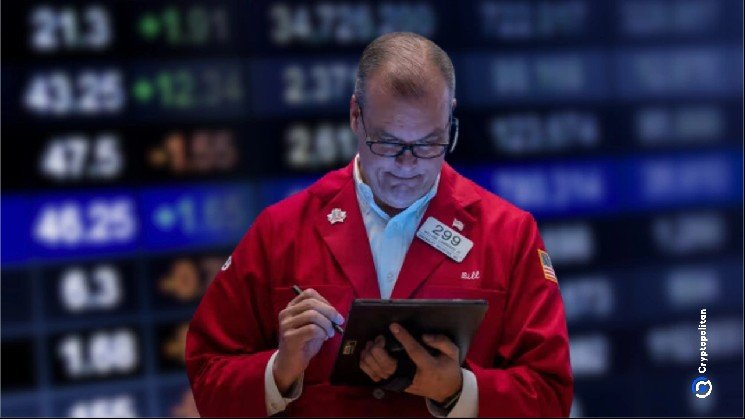
The S&P 500 set a new record on Tuesday, reaching 7,539.8 during the session, putting it on pace for a nine-week winning streak for the first time since 2023. Of course, tech companies did most of the heavy lifting, as Wall Street quickly returned to its chip fetish after the long weekend.
The Nasdaq Composite Index also set a new intraday record, while the Dow Jones Industrial Average did the opposite. The S&P 500 rose 0.5%, the Nasdaq rose 0.9% and the Dow fell 216 points, or 0.4%. U.S. markets were closed Monday for Memorial Day.
The Iran story stayed on traders’ screens. President Donald Trump said Monday that negotiations with Iran to end the war are “progressing well.” Donald also said the United States could attack if talks break down. Early Tuesday morning, the United States announced it had carried out a “self-defense” strike in southern Iran.
Tim Hawkins, a spokesman for U.S. Central Command, said the targets included missile launch sites and Iranian boats that had attempted to plant mines. Tim said the United States exercised “restraint during the duration of the ceasefire” between the two countries.
The S&P 500 rose 0.9% last week, snapping its longest weekly winning streak since late 2023. The Dow Jones Industrial Average rose 2.1%, its third weekly gain in four weeks. The Nasdaq rose 0.5%, winning seven of the past eight weeks.
Tech stocks lift S&P 500 as memory chip names dominate market
Micron Technology (MU) soared 20%, pushing its market cap above $1 trillion as analysts became increasingly bullish on the stock.
UBS said Micron could appreciate more than 100% in the future due to its long-term contract. Stocks got off to a tough start last week as memory chip stocks sold off, but they still ended the week with big gains.
“We believe that as the details of the structural changes that AI has brought to the overall memory complex become clearer, the market will begin to price the stock at more ‘normal’ multiples, and MU will continue to revalue higher in the future,” UBS said.
Other memory stocks traded similarly. Seagate Technology (STX) rose 5% and Western Digital (WDC) rose 8%. The Round Hill Memory ETF (DRAM) rose 15% to a new record.
Nvidia (NVDA) also joined the market after Rothschild & Company Redburn raised its price target from $280 to $300. This target represents an almost 40% upside from Friday’s closing price. Analyst Tim Schultz Melander said in a note Tuesday that Nvidia’s quarter was “nearly perfect.”
“Data center revenue accelerated from $250 billion ARR and 75% year-over-year growth (Q4) to $300 billion ARR and 92% year-over-year growth (Q1),” Timm wrote. “Sales to hyperscale customers grew an impressive 115% year over year as capital spending shifts from land and buildings to silicon in 2025.”
Tim said competitors need to grow faster than Nvidia over the long term if they want to prove they have market share. He also said that Nvidia has earned investor confidence through its earnings performance. The company’s expected price/earnings ratio is over 21 times.
Meanwhile, Intel (which missed out on the first major gains of the AI rally) has seen its stock increase more than sixfold and is trading near all-time highs this past week. As the market reopens today, U.S. chipmakers are poised to make a major comeback after receiving significant investment from the U.S. government last summer. Qualcomm, Advanced Micro Devices, and Marvell Technologies all hit record highs.
Following the U.S. airstrikes, West Texas Intermediate crude oil futures for July fell back from the day’s low, trading 3% lower at $93 a barrel. Brent crude oil rose 3% to trade at $99 a barrel.
Low oil prices pushed up stock prices last week. US crude oil prices had their worst week since April 17th.
Oil prices remain well above levels seen at the beginning of the year, and price pressures have not disappeared. This dampened bets that the US Federal Reserve would ease policy. Based on the CME FedWatch tool, traders now believe the probability of a July rate hike is about 13%, up from 0.9% a month ago.


