

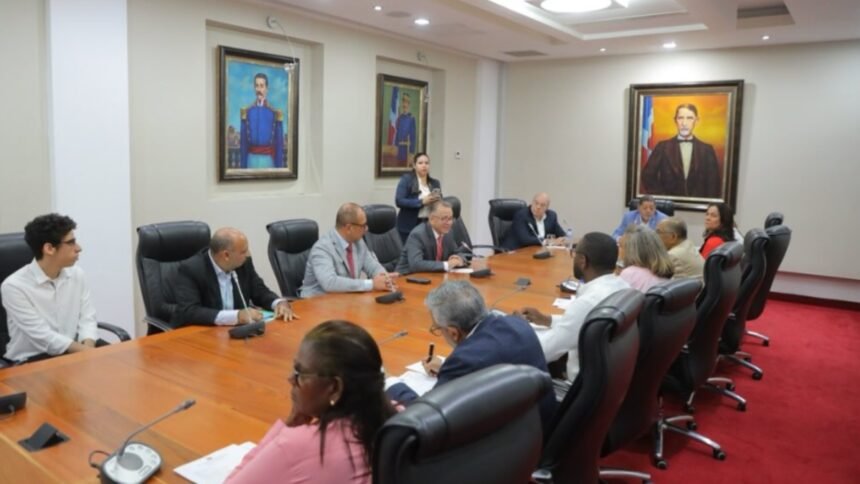
The Permanent Committee on Finance of the Dominican Republic’s House of Representatives met with a group of businessmen on Thursday, May 28, to advance the development of a bill to regulate virtual currencies in the country.
The legislative body reported on social networks that the meeting, held in the Juan Pablo Duarte National Complex, Key stakeholders from the local financial and technology ecosystem participated.
Among those in attendance were Virgilio Albert and Michael Albert, representatives of the Multicouptos Group. Jose Frank Almeida, from FINLABS. Quiruvio Fernandes, financial and real estate agent. Mr. Julio Ferron, representative of NEITEC. and Juan Garrido of Tether, the issuer of the USDT stablecoin.
As reported by CriptoNoticias, through these working meetings, lawmakers received the technical feedback needed to amend and strengthen the regulatory framework presented by Congressman Carlos de Pérez in March of this year.
The bill focuses on the prevention, control and supervision of digital currencies. Most notably, it defines Bitcoin (BTC) and other digital assets as taxable assets. This means that any gain arising from its exchange or sale must be taxed in the same way as any other financial asset, according to the regulatory model. Already implemented in other countries in the regionlike Mexico and Colombia.
The private sector and local communities have shown positive attitudes towards this initiative. Organizations such as Bitcoin Dominicana have previously raised concerns after identifying significant red flags in the initial proposal, warning that certain guidelines could undermine the development of the technology ecosystem, business, and investment attraction.
This reaction triggered the opening of a technical dialogue table. Incorporate expert vision into the final draft of the standard.
Indeed, upon learning of the talks between Dominican politicians and businessmen, Bitcoin Dominicana expressed that the Caribbean country “has the opportunity to become a regional leader in financial innovation if it strikes the right balance between protection, education, and technological openness.” “Actual implementation has already begun,” they noted.
The development of these debates in the Dominican Congress is indicative of a trend in Latin America towards the institutional formalization of digital assets.
By bringing entrepreneurs and professional communities to the worktable, local governments are seeking to design legal structures that manage the balance between risk mitigation and the growth of a fully expanding digital ecosystem.
(Tag translation) Bitcoin (BTC)


