

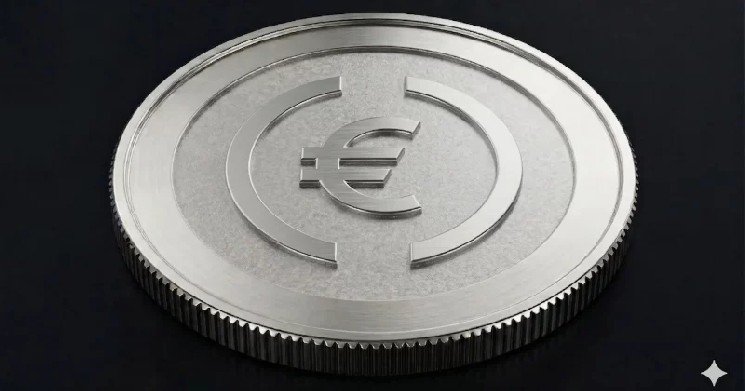
Europe has developed a regulatory framework. American companies came along and claimed the throne.
Circle, the US-based issuer behind the widely used USDC dollar stablecoin, offers the largest euro-denominated stablecoin in circulation today. the $EURC The token has emerged as the leading EUR stablecoin that is compliant across multiple blockchain platforms. This distinction is important as the European Union’s Market for Cryptoassets (MiCA) regulation reshapes the companies that can participate in the continent’s digital money market.
How a Boston-based company beat Europe at its own game
Circle’s $EURC is fully backed by euro reserves held by institutions of the European Economic Area. The company issues certificates every month proving the existence of these reserves. Circle ranks among the top 10 global stablecoin issuers and is the only company in its tier to offer a full-reserve model that meets MiCA requirements on both sides of the Atlantic dollar-euro divide. Circle is the first major stablecoin issuer to achieve MiCA compliance for both USD and EUR variants.
Competition is intensifying, but from behind
The euro stablecoin market, which previously hovered in the range of €400 million to €700 million in total circulation across issuers, is rapidly expanding.
HEURO is a new entrant, apparently published by a European company, which recently claims a circulation of over 600 million euros. If this figure is accurate, it would roughly double the previous market supply.
Next, Société Générale-FORGE, the digital asset arm of a major French bank, launched its own euro stablecoin called EURCV.
Why MiCA changed everything
Until MiCA came into force in 2024, the Eurostablecoin market operated under a patchwork of national regulations, and institutional adoption was minimal as compliance officers were unable to confidently greenlight exposure to tokens operating in regulatory gray zones. MiCA created a real playing field for institutional investors by establishing clear rules regarding reserve requirements, redemption rights, and issuer licenses. Compliant issuers suddenly had a moat, and non-compliant issuers faced existential pressure to adapt or exit.
Circle has been preparing for regulatory scrutiny for years, navigating the complex compliance environment in the United States and responding to any emerging frameworks in Europe. When MiCA arrived, Circle was ready. Many European issuers did not.
What this means for investors and the broader market
Euro-denominated stablecoins are a critical infrastructure for European DeFi adoption. Without a reliable and compliant EUR stablecoin, European users and institutions will be forced to go through dollar-denominated assets, adding currency conversion costs and exposure that many would prefer to avoid.
If the main digital representation of the euro is controlled by a U.S. company, European monetary authorities will have less visibility and influence over the growing area of euro-denominated transactions.
A key metric to track is the change in market share throughout 2025 as more MiCA-compliant issuers enter the market. While Circle’s early advantage is real, European banks have distribution networks among institutional customers that crypto-native companies can only dream of.


