

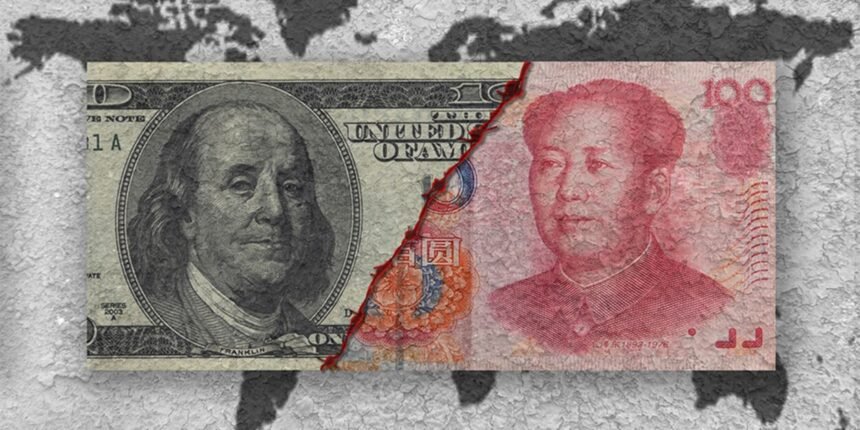
The United Arab Emirates’ (UAE) financial structure is facing a stress test following recent regional conflicts. The Emirati government has proposed to Washington that it use the Chinese yuan for oil trade if access to dollar liquidity is restricted. If this possibility becomes a reality, it could completely change the world’s energy situation.
The UAE’s stance follows damage to oil infrastructure and disruption in the Strait of Hormuz caused by the crisis with Iran. Although a ceasefire has been in effect since mid-April, export revenues have decreased. Creates a precautionary need to strengthen international reserves. For a country whose currency, the dirham, is pegged to the dollar, ensuring stable circulation of U.S. currency is a technical rather than a political priority.
At a recent meeting with the Treasury Department and the Federal Reserve Board in Washington, UAE Central Bank Governor Khaled Mohamed Barama considered creating a swap line. This mechanism would allow the Emirates to convert local assets into dollars at low cost, a tool that the United States has provided to allies under financial pressure in the past, as happened with Argentina in 2025.
However, the Fed’s recent response has been cautious. Some experts believe that immediate approval is unlikely, arguing that: The financial relationship between the UAE and the US market is not very deep. Something like Europe or Japan.
In the face of such resistance, Emirati officials suggested that using the Chinese yuan or other currencies for energy transactions would no longer be an option, but an operational necessity, once the dollar’s liquidity mechanism was depleted, according to a Wall Street Journal report.
This argument also has diplomatic benefits. Signals from Abu Dhabi suggest that US military strategy in the region contributes to its involvement in the conflict and strengthens expectations for mutual financial support.
While export logistics normalize, this process may be extended until the end of June. Emirates chooses to diversify its funding sources through debt issues and regional agreements with Bahrain.
But the case highlights the fact that in a system in which oil and the dollar have been tied together for decades, any friction in the money supply opens the door to new financial infrastructure.
According to a report by CriptoNoticias, moves like the UAE’s are part of a gradual de-dollarization process that several countries have been promoting in international trade for several years. In this context, some investors see Bitcoin (BTC) as: Reserve of neutral alternative values Because it operates outside of a system controlled by any particular government or geopolitical bloc.
(Tag Translation) Economy


