



A new push to solidify America’s foothold in the digital asset market emerged on Thursday, as lawmakers unveiled legislation to establish a formal Strategic Bitcoin Reserve and consolidate the federal government’s multibillion-dollar cryptocurrency stockpile.
The American Reserve Modernization Act of 2026 (ARMA), sponsored by Representative Nick Begich, mandates the creation of a secure Bitcoin reserve within the U.S. Treasury, alongside a separate “digital asset reserve” for non-Bitcoin cryptocurrencies held by the federal government.
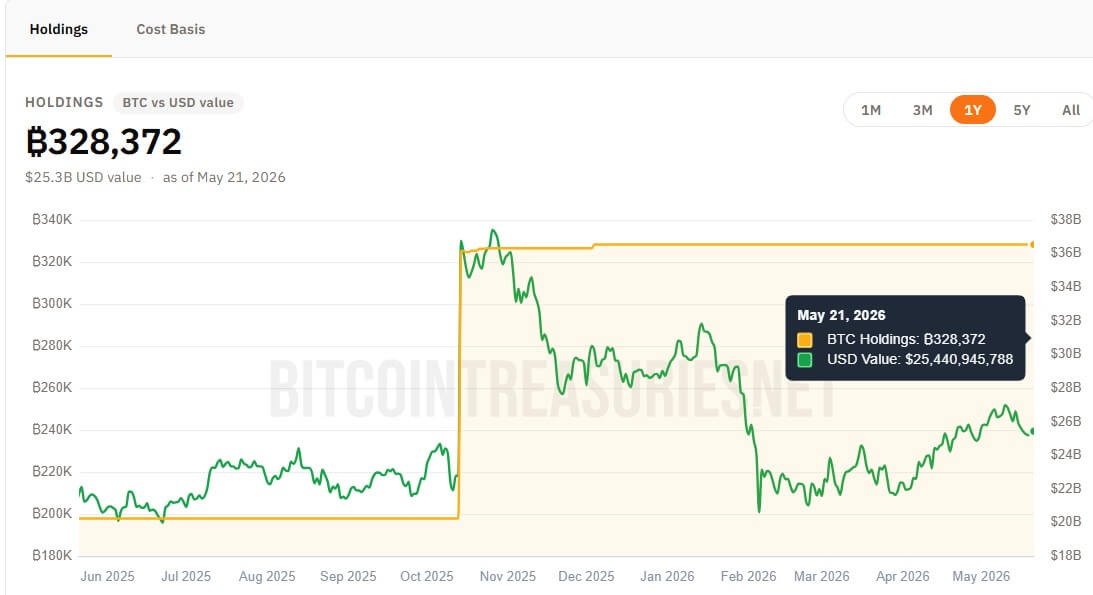
The bill is intended to provide long-term structure for the government’s existing digital assets, which have been accumulated primarily through seizures by law enforcement. According to Bitcoin Treasury data, the United States currently holds 328,372 Bitcoins, worth more than $25 billion.
Begich said in a statement:
“The American Reserve Modernization Act positions the United States to confidently lead in the digital age while protecting taxpayer interests, strengthening financial sovereignty, and reinforcing principles of transparency and sound governance.”
The bill has 17 original House co-sponsors, including Buddy Carter, Ben Kline of Virginia, Barry Moore of Alabama, Burgess Owens of Utah, Mariannette Miller-Meeks of Iowa, Mike Carey and Michael Rulli of Ohio, Mike Collins of Georgia, Mike Lawler of New York, Riley Moore of West Virginia, and Tim Moore of North Carolina.
Apart from strong legal support, crypto industry leaders are already stepping up efforts to counter this.
Matt Cole, CEO of bitcoin treasury firm Strive, called the proposal “the single most important crypto bill to come out of D.C.” for the long-term health and security of the United States.
ARMA Establishes Bitcoin Bet for 20 Years
If passed, this bill would fundamentally change how the Washington government handles digital assets. Rather than routinely auctioning off seized cryptocurrencies, the Treasury Department would need to consolidate control and oversight across all federal agencies.
Importantly, the law requires Bitcoin held in strategic reserves to be maintained for at least 20 years, effectively turning the US government into a long-term “holder.”
In response to persistent industry demands for transparency, the bill establishes stringent reporting measures. The Treasury Department would be required to issue quarterly public “proof of reserves” reports, submit them to independent third-party audits, and face direct oversight from Congress.
The bill also directs the study of budget-neutral acquisition strategies. The goal is to evaluate legal ways for governments to grow their digital assets without resorting to raising taxes, deficit spending or adding to the national debt.
Additionally, the bill provides an olive branch to cryptocurrency proponents by explicitly protecting the right to self-control, ensuring that the federal government cannot undermine Americans’ lawful rights to own, transfer, or independently protect digital assets.

Pro-Bitcoin momentum grows in Washington
Begich’s proposal builds on broader and ongoing efforts in Washington to reorient the United States toward a pro-cryptocurrency stance.
Last year, Sen. Cynthia Lummis proposed the Bitcoin Act, which would require the U.S. to acquire 1 million bitcoins over five years, hold the assets for at least 20 years, and spread storage across secure sites across the country.
The bill also includes a funding mechanism tied to the Federal Reserve’s gold certificates, making the proposal a direct bet on converting a portion of the federal balance sheet to Bitcoin exposure.
The Lummis Act follows President Donald Trump’s executive order to establish a strategic Bitcoin reserve.
However, despite the Trump administration’s pro-cryptocurrency stance, these efforts have stalled considerably.
Still, the Begich bill aims to build on recent advances in transparency legislation that passed the Senate Banking Committee with bipartisan support. The bill aims to establish clear rules for the industry and encourage institutional investment.
(Tag Translation) Bitcoin


