


The European Central Bank is moving its digital euro from planning to testing, with dozens of payment companies participating in the next phase of the project.
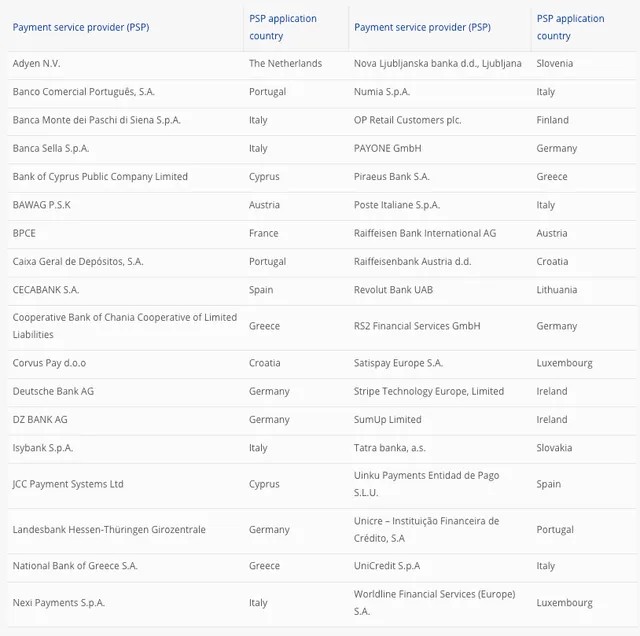
The ECB has selected 36 payment service providers (PSPs) to take part in the digital euro trial, according to an official announcement released on Tuesday.
The list of selected PSPs includes traditional banks such as Deutsche Bank, UniCredit and BPCE, as well as fintech companies Stripe and Revolut. Revolut recently adjusted some of its cryptocurrency services for EU users by phasing out support for Tether USDt.
The pilot comes as governments around the world take different approaches to digital currencies. While Europe expands testing of a proposed central bank digital currency (CBDC), the United States moves to block the Federal Reserve from issuing a CBDC.
Italy tops the list of Digital Europilot providers
The ECB began selecting providers from across the euro area for the digital euro pilot earlier this year, with the 12-month pilot expected to begin in the second half of 2027.
The central bank announced that it received applications from more than 50 payment companies after it began offering interest in March 2026. Selected participants include traditional banks, payment processors, and non-bank service providers.
Source: ECB
Italy has the highest number of selected participants, with seven companies participating in the pilot: UniCredit, Poste Italiane, Nexi Payments, Banca Sella, Banca Monte dei Paschi di Siena, Isybank and Numia.
Germany has selected five providers, while Portugal and Greece have selected three each. The ECB said such a combination of countries is designed to create a broad testing environment, allowing selected providers to offer pilot services outside their home markets.
Strong interest in piloting a digital euro
ECB Executive Board member Piero Cipollone, who chairs the High-Level Task Force on the Digital Euro, said the level of participation showed the private sector’s interest in supporting the development of the euro, adding that the central bank looked forward to deeper cooperation with payment providers during the pilot period.
“We look forward to deeper engagement, collaborating and learning from European payment service providers towards the development of a secure, efficient and inclusive digital euro,” Cipollone said.
The pilot will involve the ECB and the central banks of the bloc’s 19 member states, including Belgium, Germany, France, Italy, Spain and the Netherlands, as well as payment companies and merchants who will also test the system before issuing tokens.
The selected providers will have different responsibilities during the trial, with some providers focusing on supporting user access to the beta Digital Euro service, and others focusing on supporting merchants to accept payments. According to the ECB, several companies will take on both roles.


